
Can Commercial VR Equipment Work in Shopping Malls?
The modern shopping mall is no longer just a retail destination; it is an evolving experience hub where leisure and entertainment drive foot traffic and increase dwell time. In this landscape, commercial VR equipment is not just a novelty—it is a potent strategic tool for mall operators and tenants. The answer to whether it can work is an unequivocal yes, but its success hinges on selecting the right type of equipment and deploying it with a clear understanding of the mall’s unique operational dynamics. When executed correctly, a VR attraction transforms empty space into a high-value entertainment anchor, directly contributing to the mall’s vitality and revenue.
As a leading VR entertainment solutions provider, FuninVR has a proven track record of deploying successful VR attractions in malls across various markets. We design our solutions with the specific constraints and opportunities of mall environments in mind.
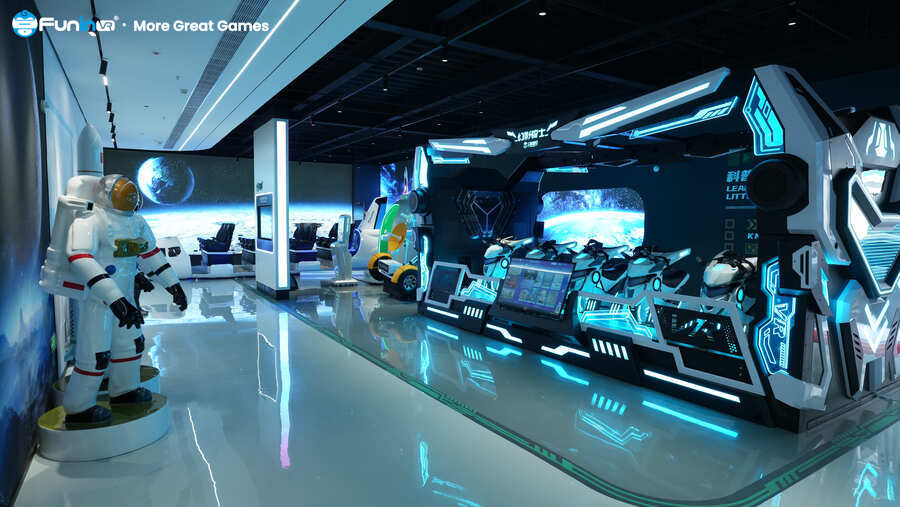
Why Malls and VR Are a Perfect Strategic Fit
Malls present an ideal environment for commercial VR due to several inherent advantages:
-
Massive, Captive Audience: Malls naturally attract high volumes of diverse visitors—families, teens, couples, and tourists—all seeking activities beyond shopping. This provides a ready-made customer base for an impulse-driven entertainment offering.
-
The “Experience Economy” Driver: Consumers increasingly value experiences over products. A VR simulator or interactive arena offers a memorable, shareable activity that complements retail therapy, giving people another reason to visit and stay longer.
-
Optimization of Underutilized Spaces: Malls often have vacant storefronts, unused atrium areas, or empty kiosk spaces. These can be efficiently converted into compact, high-impact VR zones or pop-up VR experiences with relatively low overhead, turning a cost center into a profit center.
-
Impulse Purchase Model: Mall entertainment thrives on spontaneous decisions. Short, thrilling VR sessions (5-15 minutes) with immediate availability perfectly match this impulse-driven spending behavior.
Choosing the Right VR Equipment for a Mall Environment
Not all commercial VR is suited for a mall. The winning formula prioritizes spectacle, accessibility, and high throughput. Here are the most effective types:
-
Compact VR Motion Simulators & Pods:
-
The Fit: These self-contained units, like VR racing simulators or flight capsules, are visual magnets. The sight and sound of a moving cockpit instantly draw a crowd. They require a modest footprint, can be arranged in small clusters, and offer a quick, intense personal thrill.
-
FuninVR’s Edge: Our simulators are engineered for public durability and easy operation. We offer themed options that are visually striking to attract families and thrill-seekers alike from across the concourse.
-
-
Interactive VR Attraction Cabins (Shooting/Gallery Games):
-
The Fit: These attractions have an instantly understandable premise—pick up a blaster and start playing. They offer social, competitive fun for small groups with virtually no learning curve, making them perfect for capturing passing families and friends.
-
FuninVR’s Edge: We provide immersive cabin experiences with haptic feedback and environmental effects that tell a mini-story in a few minutes, ensuring a satisfyingly complete experience that encourages repeat play.
-
-
VR Interactive Motion Theaters (9D Theaters):
-
The Fit: This is arguably one of the best formats for malls. A VR motion theater can seat 8-20 people per show, making it a high-capacity group attraction. It offers a spectacular, guided experience (like a virtual roller coaster or adventure film) that appeals to all ages and requires no special skills, maximizing its market reach.
-
FuninVR’s Edge: Our immersive dynamic cinema systems are designed as turnkey solutions. They are reliable, safe, and deliver a powerful multi-sensory “wow” effect that generates strong word-of-mouth, crucial for mall-based marketing.
-
-
Modular Free-Roam VR Zones:
-
The Fit: For larger vacant spaces, a free-roam VR arena creates a destination-worthy experience. It’s ideal for driving group traffic for birthdays or corporate events, commanding a higher ticket price for a longer, shared adventure.
-
FuninVR’s Edge: We design scalable arena solutions that can be tailored to fit specific mall unit dimensions, complete with striking theming to create an undeniable focal point.
-
Key Success Factors for Mall VR Deployments
To ensure profitability, operators must focus on more than just hardware:
-
Location, Location, Location: Place the attraction in high-traffic areas—near food courts, major anchor stores, or main atrium intersections. Visibility is paramount.
-
Professional Operations & Marketing: Staff must be adept at quickly onboarding customers and managing queues. Leverage the mall’s marketing channels and promote the attraction as a “must-try” experience alongside retail offers.
-
Content Rotation & Freshness: To encourage repeat visits from local residents, regularly update or rotate the VR experiences. Partner with a provider like FuninVR that offers a managed LBE content library and options for custom VR content to keep the offering fresh.
-
Robust, Hassle-Free Technology: Downtime is lost revenue. Equipment must be commercial-grade, like FuninVR’s, built for all-day operation with reliable support and remote monitoring to resolve issues swiftly.
Conclusion: A Transformative Partnership Opportunity
Integrating commercial VR equipment into a shopping mall is a forward-thinking strategy that aligns perfectly with the shift towards experiential retail. It is a viable, profitable venture that enhances the mall’s ecosystem by increasing visitor engagement, dwell time, and overall perceived value.
Success comes from selecting equipment designed for the public, high-throughput environment of a mall and from partnering with an experienced provider. FuninVR acts as a comprehensive VR solutions partner for mall operators, offering not just durable, eye-catching hardware, but also the content, operational insights, and support needed to build and sustain a thriving entertainment attraction. We turn underutilized space into a dynamic hub of excitement, proving that VR is not just compatible with malls—it’s a catalyst for their modern evolution.
VR equipment, Commercial VR Equipment
MAY BE YOU LIKE ALSO

© 2019 All rights reserved by Zhuoyuan Co., Ltd